
Jetstream Electrical Appointed NT Distributor for F.E.S. Self-Bunded Tanks

JETSTREAM- self bunded tank distributor for darwin, nt hero image

New self bunded tank distributor appointed in Darwin, Northern Territory

Press Release: Cairns, Queensland, Australia.
Sept 18, 2018, 22:21 ET

F.E.S. TANKS, Australia’s market leader in self-bunded fuel storage tanks, has expanded its reach in the Northern Territory through a new distribution agreement with respected operator Jetstream Electrical.

JETSTREAM- self bunded tank distributor for darwin, nt hero image

F.E.S. TANKS is an Australian-owned, trusted supplier of professional-grade self-bunded fuel storage tanks and mobile refuelling solutions to the commercial, industrial, mining, agricultural, aviation and fuel retailing industries.

Jetstream Electrical Director Kevin Pettitt said his team had been using F.E.S. TANKS for many years, particularly for remote refuelling solutions.

“F.E.S. TANKS are based in North Queensland and their products are well suited for remote installations,” he said.


“They are superior to other products in terms of their volume and range and the way they are constructed – they’re a really robust tank and value for money.


“We have installed many F.E.S. TANKS already over the years, and the feedback has been overwhelmingly positive.


“We’re pleased to now be distributors for this industry-leading product.”


F.E.S. TANKS Director Daryl Cygler said building on the longstanding relationship between F.E.S. TANKS and Jetstream Electrical was good news for Northern Territory businesses.

“The team at Jetstream are experts at designing and installing fuel systems, particularly in remote locations,” he said.


“They know and trust our tanks because they are built to last, with practical features that make them easy to use, transport and maintain – ideal for responding to the challenges of temporary and remote power requirements in the Northern Territory and across regional Australia.


“We look forward to working with Jetstream Electrical to give Northern Territory customers access to a top quality, Australian-designed fuel storage solution, backed by local technical know-how.”


About F.E.S. TANKS

F.E.S. TANKS has become the market leader in self-bunded storage tanks in Australia.

Established in 2013, their reputation for offering environmentally-friendly fuel storage tanks with unique fuel dispensing and management solutions has led to fast national growth and expansion.

F.E.S. TANKS works with industries on the move to provide innovative, next-generation fuel storage solutions designed to take business into the future.

For more information go to www.festanks.com.au


About Jetstream Electrical

Jetstream Electrical is a Darwin-based business servicing all areas of the electrical and petroleum services fields.

Their team of A-grade licensed tradesmen are specialists in remote electrical services and have the skills, knowledge and adaptive ability to meet the changing needs of Northern Territory businesses.

Find out more at www.jetstreamelectrical.com
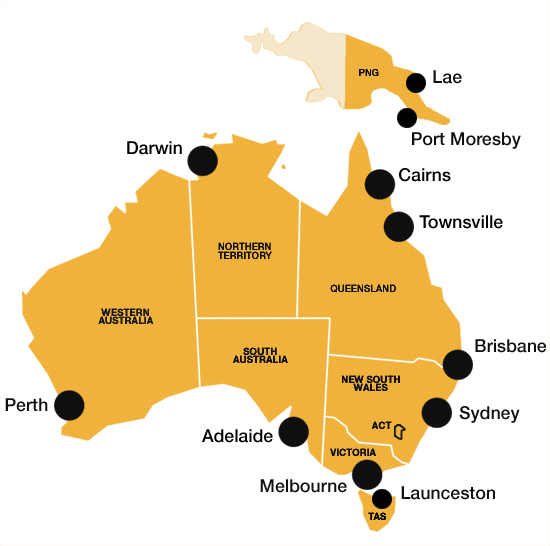
F.E.S. TANKS - Our Locations

Record truck sales bring new technology to Aussie roads

Record Truck Sales Bring New Technology to Aussie Roads-hero image

Record truck sales bring new fuel saving technology to Aussie roads

Transport fleets are increasing their rate of adoption of fuel-saving technologies – and enjoying the benefits in fuel economy – according to the annual fleet study in the USA.

Australia has already seen trials of innovations like platooning, and our Truck Industry Council (TIC) says investment in new vehicles and their accompanying new technology is up in 2018.

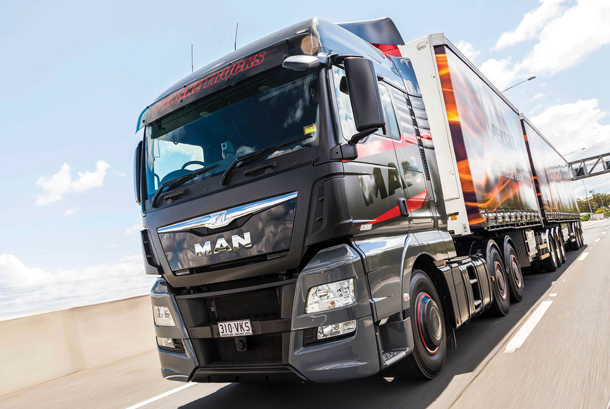
New offerings like the Man TGX D38 are bringing latest fuel efficiency technology to Australian transport fleets.

What US transport fleets are doing with fuel-saving technology

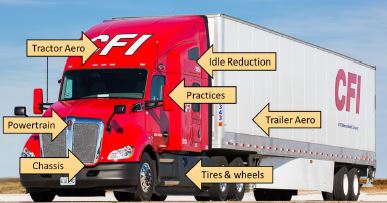
The North American Council for Freight Efficiency’s (NACFE) 2018 Annual Fleet Fuel Study, which looks at the adoption of products and practices to improve freight efficiency among 20 major North American fleets, found the overall adoption rate for 85 currently available technologies grew from 17 per cent in 2003 to 44 per cent in 2017, with economic benefits totalling more than $636 million across the fleets in 2017. Fleet vehicles that were latest models were delivering up to 4.25kpl.

Let’s put the survey in context. In the United States, fuel costs over the past decade have fluctuated from around 20-40 per cent of the total cost of operating a commercial vehicle. While fuel-saving technologies have increased, barriers to adoption have included a lack of data about performance gains and a lack of confidence about the payback on investment.

Investment in proven technologies that let fleets do the same amount of business while spending less on fuel are a promising option, but the needs of operators are vastly diverse. The NACFE research aims to provide the information the industry needs by gathering information around the purchases of 20 fleets that involve any of the 85 relevant technologies.

The 2018 report found fleets that successfully adopted the technology tried to make the new specifications their norm, recognising that implementation was not always easy and involved a change management process including driver and technician training and new suppliers.

“ContinuiNACFE's 2018 report summarises adoption of key fleet fuel-saving technologiesng to make investments in technologies that improve fuel efficiency makes good sense,” a senior executive at one of the large US carriers told NACFE.

“Given the historic volatility of oil prices, it’s a safe bet that we’ll see the price of diesel go up, (and) fleets that have improved their fuel economy will be at a competitive advantage when that happens.”

Technologies that had the largest gains in adoption rate were cab extenders, lower viscosity engine oil, shift to neutral, direct drive transmission, in-cab cameras, high efficiency alternator, engine start-stop for HVAC, trailer tail fairings, trailer solar panels, two-speed/modulated cooling fan clutch, two-speed/variable speed water pump and trailer lift axle. Smaller fleets were higher adopters of cab insulation, tyre pressure monitoring and wide-base tyres.

The Australian story – a bumper year for truck sales

The good news in Australia is that truck sales results for 2018 suggest a record investment in new trucks, with their accompanying fuel saving features.  This year’s January to June result – with 19,970 heavy vehicles delivered – smashed the previous mid-year peak and bodes well for a more fuel-efficient industry.

Truck Industry Council (TIC) President Phil Taylor says it’s the first step in a long road– the average age of Australia’s truck fleet is 14 years for trucks above 3.5t GVM, compared with seven years in Western Europe, and the TIC argues adoption is being slowed by technical restrictions which mean we are out of step with global dimensional and axle mass limits, making it expensive to import some vehicles without expensive modifications.

“We need regulators to work more closely with truck manufacturers, the companies developing these technologies, to develop processes that could see the streamlining of new regulation development and introduction in Australia,” Phil says.

“Most importantly, we need these new technologies and features to filter through our nation’s truck fleet far more quickly than is currently happening, and that can only be achieved with a newer, younger truck fleet.”

Consider upgrading fuel storage and systems

If new vehicles are not yet an option, managing fuel quality through storage and monitoring fuel use through fuel management systems are proven options to improve fuel efficiency.

Poorly managed diesel fuel is responsible for about 80 per cent of engine failures in the transport industry, and in a time critical environment these failures can cost a business much more than the price of engine repairs.

Find out more about keeping fuel costs down from the fuel storage specialists at www.festanks.com.au

Farmers stay resilient in face of drought

AUSSIE FARMERS STAY RESILIENT IN FACE OF DROUGHT hero image

Farmers stay resilient in face of drought

Australian farmers resilient as more drought assistance announced

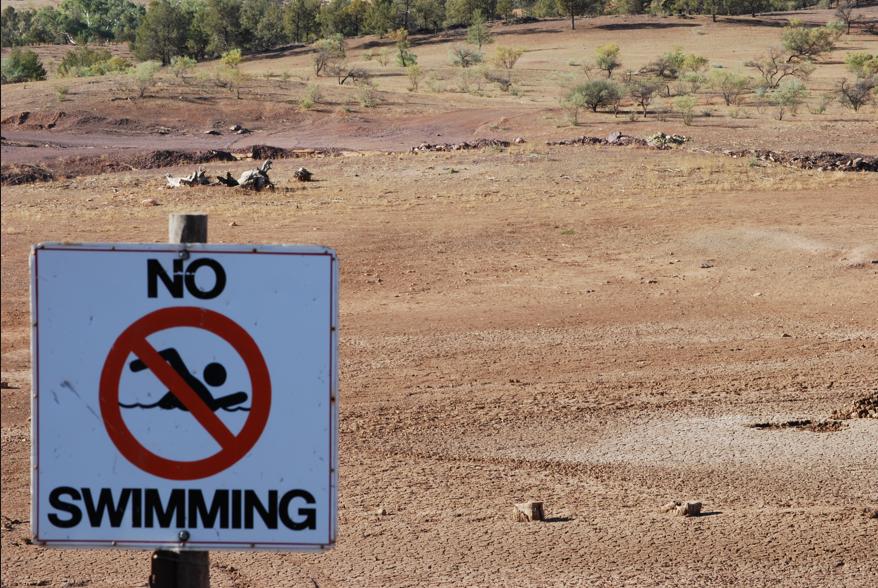
Australia’s 135,000 farmers are tightening their belts as the severe drought gripping the eastern states deepens and forecasts point to a dry, hot spring and summer – but it’s not all bad news.

While the Rabobank rural confidence index survey signals an expected drop in positive sentiment across regional Australia over the past three months – with 100 per cent of NSW and much of Queensland and Victoria in drought – it shows most farmers believe their businesses are well-equipped to weather the storm.

More than 93 per cent of around 1,200 farmer surveyed around Australia said they will remain viable for the next year even if the big dry continues or an El Nino event develops.

Rabobank Australia CEO Peter Knoblanche said farmers across the country are showing great resilience and adaptability to manage their businesses through worsening drought conditions.

“Parts of central and western Queensland have been in drought for seven years with only sporadic short-term relief, while the whole of NSW is drought-declared and its reach is spreading into South Australia and Victoria,” he said.

“(But) the outlook for Australia’s ag sector is fundamentally very sound, with strong commodity prices – particularly for lamb, bee, wool and cotton and, more recently, grain – ensuring the majority remain in overall strong positions.

“Farmers have managed through droughts before and have put in place the infrastructure and systems to try to mitigate the impact as best they can. That is not to say it isn’t extremely challenging, especially in areas where it has been so prolonged.”

Western Australia was the only state that bucked the trend, with improved conditions meaning 48 per cent of the state’s farmers were expecting an increase in gross farm incomes.

Farmers in Tasmania and Western Australia were more likely to be planning to increase investment in their farm business.

New drought assistance measures announced

Meanwhile, while farmers in some areas are celebrating their first taste of rain in a long while, the Federal Government has appointed a new national drought co-ordinator and increased direct assistance and concessional loans to $1.8 billion.

Under the next phase of drought assistance:

  • The Drought Communities Programme will be expanded and receive an additional $75 million to help support 60 councils in drought-stricken areas, funding local community infrastructure and other projects, such as emergency water supply.
  • Primary producers can immediately deduct (rather than depreciate over three years) the cost of fodder storage assets, such as silos and hay sheds used to store grain and other animal feed storage, making it easier for farmers to invest in and stockpile fodder. The deduction will be available for storage assets first used or installed ready for use from August 2018.
  • The instant deduction is in addition to the $20,000 instant asset write-off already available for small businesses to support capital investment in infrastructure. The write-off is one way farm businesses can take measures to improve cost-efficiency, including upgrading farm fuel storage to maximise efficiency and reduce farm fuel costs.
  • The Government is doubling the amount a farmer can borrow in low-interest loans to $2 million and increasing the total amount available for these loans to $500 million in any one year. These loans will assist with financing immediate needs such as purchasing feed and fodder. The first five years of these loans will remain interest only. Farmers with existing government loans will also be able to refinance to take advantage of the interest-only concessional period.
  • An additional $23.7 million will be provided to improve drought resilience by extending the Great Artesian Basin bore capping program that plugs abandoned bores and replaces free-running channels with new water-efficient piping.
  • There will be a special drought round under the National Water Infrastructure Development Fund that will provide up to $72 million for water infrastructure in drought-affected areas.
  • An additional $2.7 million will be provided to allow the Bureau of Meteorology to develop new finer scale regional weather and climate guides, helping farmers make decisions about crop planting and stocking levels by better understanding their local climate risks.

NSW freight changes support hay transport to drought-affected farmers

In NSW, the State Government has taken action to change freight dimension allowances to reduce prices for farmers forced to look further afield to source cattle feed.

The change will allow eligible vehicles transporting hay to travel under notice and without a permit with loads 2.83m wide and up to 4.6m high on approved roads.

Minister for Roads, Maritime and Freight, Melinda Pavey, said for vehicles that weren’t eligible the process for obtaining a permit would be made easier.

NSW is also offering a transport subsidy of $20,000 per farm business to cover 50 per cent of the full cost of freight up to a maximum of $5 per kilometre and 1,500km per journey.

Fuel security review to report this year

New mandatory reporting laws for petroleum stockpiles support better fuel security

2018 Fuel Security Review for Australia

New mandatory reporting laws for petroleum stockpiles support better fuel security

Regular readers of our blog will know fuel security is an issue we’ve been monitoring for some time.

A while ago, we highlighted the potential for a major shortage in an interactive infographic.

This year, as part of the Federal Budget, the Australian Government announced it would be fast-tracking a review of liquid fuel security.

The review, which is due to release results by the end of this year, will look at issues including the resilience of our liquid fuel supply chains to withstand disruptions internationally or within Australia.

Liquid fuel including petrol, diesel and jet fuel accounts for 37 per cent of Australia’s energy use, including 98 per cent of transport needs.

Earlier this year Senator Jim Molan raised concerns about Australia’s fuel supply potentially being affected by conflict in the Middle East.

“At the moment, from my estimations, in relation to petrol we have something between 19 to 24 days,” Senator Molan told 2GB in April.

“In relation to diesel we have something between 12 to 17 days and in relation to aviation fuel… we’ve got something like 17 to 19 days.”

The comments follow an August 2017 report from the Department of Environment and Energy showing that while Australia produces its own crude oil, around 75 per cent of local production is exported and refined overseas.

“In addition, domestically produced grades of crude oil are generally not as well suited for use by local refineries as those sourced from other countries,” the report said.

We know our fuel consumption is heavily reliant on imports, with South Korea supplying 27 per cent of Australia’s refined product imports by volume in 2016-17, closely followed by Singapore with 26 per cent. Japan supplied 14 per cent, Malaysia 10 per cent and China 8 per cent.

The executive director of the Australian Strategic Policy Institute, Peter Jennings, told the ABC’s Fact Check a lack of refineries and fuel farms meant Australia would not have the capacity to store large quantities of fuel.

“We would not be able to actually keep much in-country stock because our fuel farms are now so decrepit and falling out of service that we wouldn’t have the capacity to store it all,” Mr Jennings said.

“It would take several billions of dollars to get us to a point where we’d have the storage capacity.”

In May 2018, Australian Petroleum Statistics show Australia had a 28 day stock of petroleum at current consumption levels.

The fuel security review now being undertaken will consider how fuel is used in Australia, threats to supply and the potential impact of liquid fuel disruptions to dependent sectors of the economy.

The Review will consult with key stakeholders and is inviting feedback.

Find out more at https://www.energy.gov.au/government-priorities/energy-security/energy-security-assessments/liquid-fuel-security-review